History
From a rocky point to a World Heritage roof
The official story runs from a harbour point used for food and fire, through a design competition, fourteen years of construction, a famous resignation, and an opening in the spring of 1973.
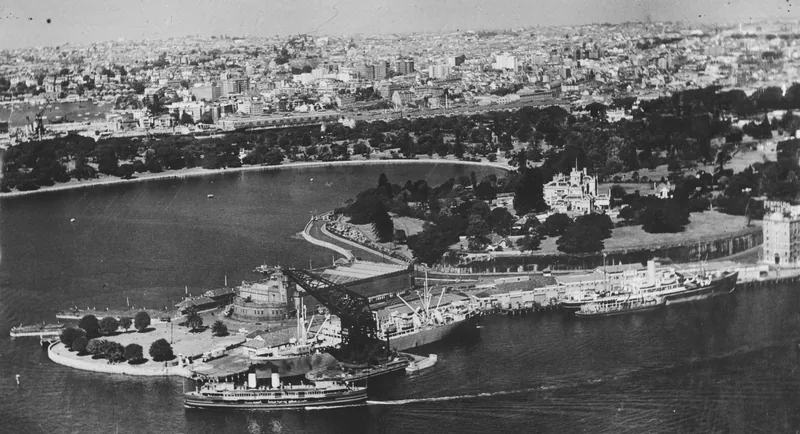
Tubowgule, the official story says, “was a point located at the end of a long, wide ridge and surrounded by rocky shoals that mostly covered at high tide.” The area was rich in oysters, mussels, fish and edible plants. Later the promontory was known as Limeburners’ Point. Its present name, Bennelong Point, “honours Woollarawarre Bennelong.” In the 1940s, before the Opera House, a tram depot stood on the point. [source]
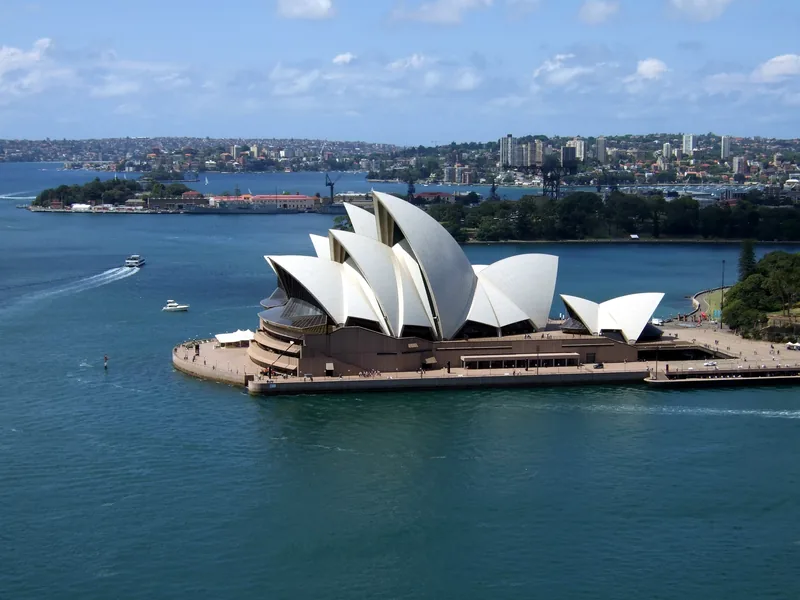
In 1955 the site was declared for a new opera house. On 15 February 1956, Premier Cahill released an international competition for “a National Opera House at Bennelong Point.” Utzon sent twelve drawings from his office north of Copenhagen. His design was numbered 218. On 29 January 1957, Cahill announced the winner: “the unknown 38-year-old Dane from Hellebæk.” [source]
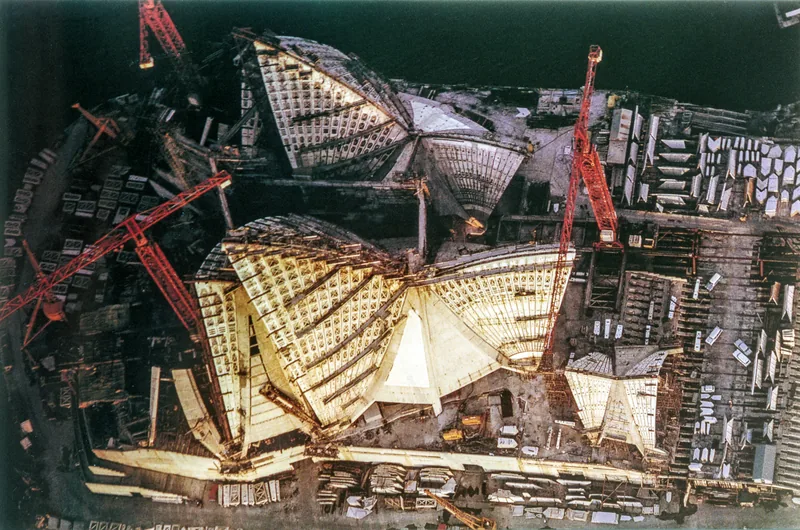
Construction began in the rain on 2 March 1959. Utzon “had arrived in Sydney a week earlier with a bronze plaque that was placed at the point where the axes of the two halls would intersect. NSW Premier Joseph Cahill screwed the plaque into place and jackhammering immediately began.” The plaque, the same page says, can still be seen on the steps today. Stage One was completed in February 1963, two years behind schedule. [source]
The roofs took longer to invent than to imagine. Between 1958 and 1962 the design moved through parabolic and ellipsoid geometry, and then to a sphere. Tiles were made in Sweden. Meanwhile costs rose, and in 1966 Utzon left the job after a short meeting with the minister Davis Hughes. On 3 March a thousand people marched on State Parliament, led by Harry Seidler and Patrick White, asking that he be reinstated. [source] [source]
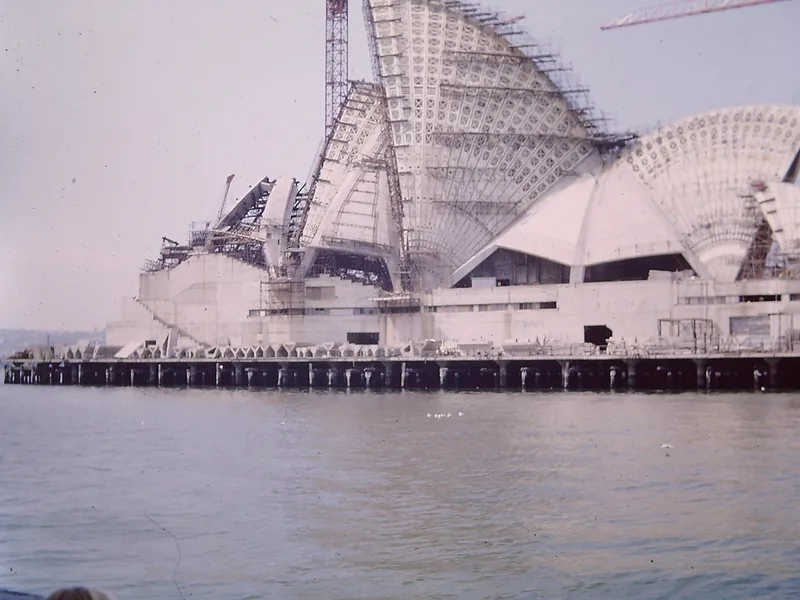
In 1960, while the building was still a worksite, “Paul Robeson was the first person to perform at Sydney Opera House.” He “climbed the scaffolding and sang Ol’ Man River to the construction workers as they ate lunch.” The tiles that would later catch the harbour light were still being solved: Höganäs of Sweden spent three years on the Sydney Tile, and the chevrons were made under the Monumental Steps. [source] [source]
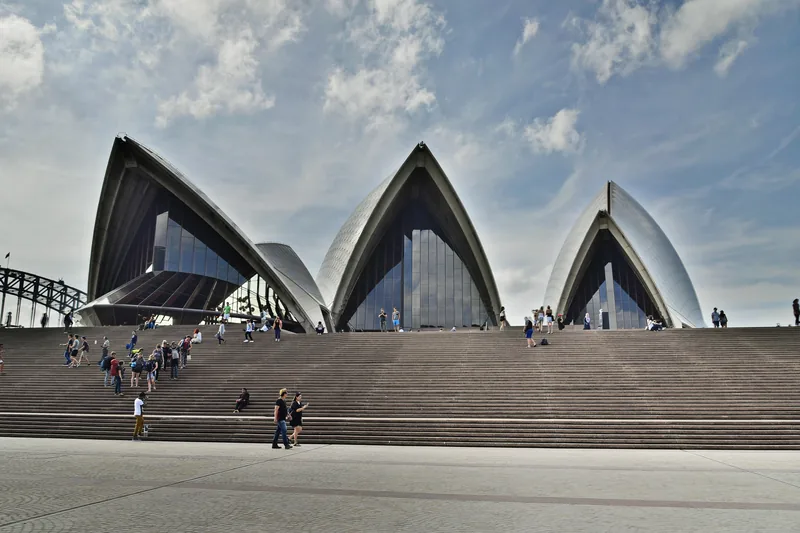
The house still opened. On 28 September 1973, almost a month before the official ceremony, the Australian Opera gave Prokofiev’s War and Peace in the Opera Hall. On 20 October, on a blustery spring day, Queen Elizabeth II opened the building, and spoke of a human spirit that “must sometimes take wings or sails.” In 2007, on 28 June, the Sydney Opera House was included on the UNESCO World Heritage List. [source] [source]
Enjoyed the Opera House?
No pop-ups. No intrusive advertising. Just interesting stuff. A little support helps the next landmarks site get built.